Saturday, September 3, 2011


Sunday, February 6, 2011
Mary Queen of Scots
First we delved into a tray of various baked goods—scones and muffins galore. And they were served with clotted cream. Oh, clotted cream! How I love thee. It was perfect to spread on the lovely scones and muffins. These treats were gone within minutes, and we were primed for the rest of the meal.

We also indulged in some cocktails and coffee throughout the meal. We ordered bloody mary’s, which were off the hook with just the right blend of tomato juice, spices, and fresh grated horseradish. What a great way to start off a lazy, winter's Sunday.


I opted for the Black Pudding Benedict with Meyer lemon hollandaise and arugula salad. I had never tried black pudding before, and I was intrigued. Basically the black pudding (also called blood pudding) is a type of sausage made from cooking blood, spices, and oats. The flavor was reminiscent of regular sausage but had a different kick to it, and the texture was more crumbly. There was also something in the flavor that just popped in a way I’ve never experienced before. The initial taste is great on it's own, but then after a moment it builds in complexity and there’s just a Pow! on your taste buds. I don’t know if it’s the blood or some kind of spice, but either way it is awesome. And the eggs were perfectly poached, oozing luscious yellow yolk over the black pudding and accompanying bread.


All the other plates were scrumptious as well. My mom opted for the House Smoked Scottish Salmon with a potato bap bun, horseradish crème fraiche, and caper berries. Sonya ordered the Corn Crumpets with Peekytoe crab, apple piccalilli, and shaved radish. And my dad opted for the French Toast au Fromage Blanc with chipolata sausage, maple syrup, and fruit.


Patrick (our resident Scotsman...well, kind of. I mean, he likes scotch but he's not actually from Scotland) of course ordered the Full Scotch Breakfast with Ayrshire bacon, chipolata sausage, grilled tomato, great northern beans, free range eggs, and a potato scone. Lucky for us Pat likes to share, so we all got to try the phenomenal Scottish bacon that came with his breakfast. It was amazing, and every mouth got to savor a little bit of the thick, hearty meat.

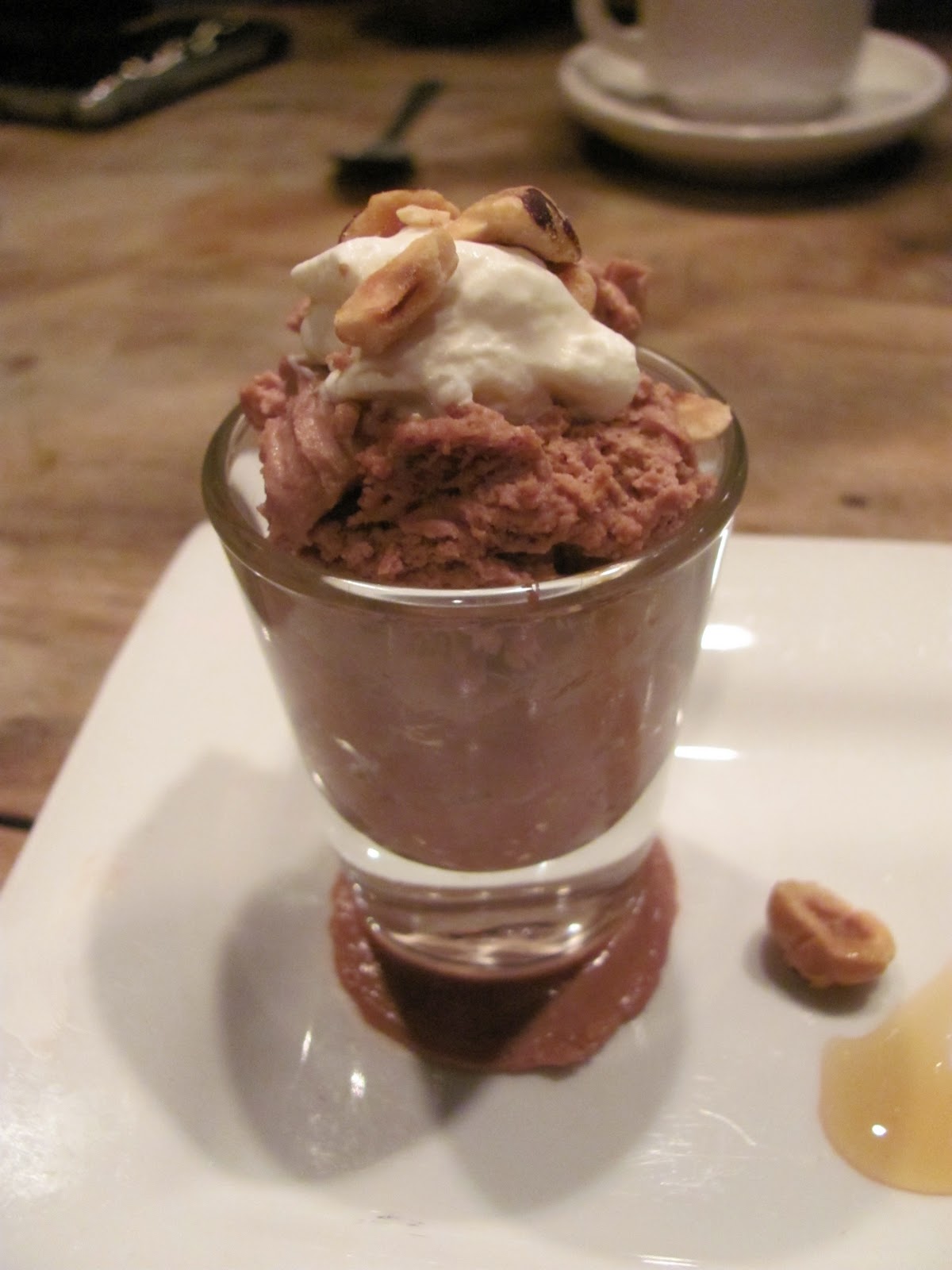
After our fabulous meal it was time for dessert. Heather’s desserts were seriously out of this world. I mean, I always knew that I had an awesome cousin, but I had no idea that she could kill it like that in the kitchen. We tried four amazingly scrumdiddlyumptious desserts, and even though were already stuffed from brunch we still devoured every bite. These desserts were not only visually stunning (as you can see) but also decadent, delicious, and perfectly executed. You’ll need to hit up Mary Queen of Scots if you want to experience these exceptional treats yourself.


These peanut butter sandwiches were probably my favorite of the desserts. The soft chocolate cookies are filled with milk-chocolate-and-peanut-butter cream and served with caramelized bananas that are flambéed with Wild Turkey American Honey Bourbon, caramelized honey ice cream, and chocolate cookie crumble. What? Can you say "amazing"? I was very impressed with all the desserts, but this one definitely stands out for me as I recollect our fabulous meal.
Mary Queen of Scots was a great place to grab brunch and devour some delicious desserts. I can't wait to go back and check out their dinner menu sometime. It's definitely worth a visit to the Lower East Side, so enjoy and don't forget dessert!


Wednesday, February 2, 2011

Friday, January 7, 2011

Monday, November 29, 2010
Thanksgiving Eve at New World




Be sure to check out my other posts on New World Bistro Bar:
New World Bistro Bar
New World Oysters
Thalamus Anyone?
Tuesday, September 28, 2010

Tuesday, September 7, 2010

Sunday, July 25, 2010
Camping

Going camping is a great way to spend time in the summer, but just because you’re roughing it in the wilderness doesn’t mean you can’t eat well. I recently went camping with my sister in the beautiful Shawangunk Mountains of New Paltz, New York, and we cooked ourselves some fabulous meals over the campfire.
When cooking food while camping tin foil is your best friend. You can wrap almost anything in tinfoil, throw it in the fire, and soon have a meal. We wrapped up everything the night before, stuck it in a fridge, then transferred it into the cooler before we hit the road, and when Friday night came after a day of hiking and waterfalls, we were ready to cook and eat.
On the menu was barbecue chicken, potatoes, and corn on the cob. For the chicken I opted for pre-cut wings. I wanted to use the small pieces to help speed up the cooking process, and since all the pre-cut wings are close in size it would ensure they all cooked at the same speed. In a bowl we tossed the wings with barbecue sauce. Now usually I try to avoid pre-made sauces that are loaded with high fructose corn syrup, but I have to admit that something about Jack Daniel’s barbecue sauce has a hold on me. We mixed together two different kinds—original spicy and hickory brown sugar, coating each wing in the sweet and spicy sauce. Then we piled the chicken into the tinfoil and stuck it the fridge so all the flavors could melt into the meat overnight.
Similarly, we tossed baby red potatoes (again opting for a small size to help speed up the cooking process) in olive oil, salt, and pepper and wrapped them in foil. For the corn we set out squares of foil and rubbed a stick of butter on one side of the foil and sprinkled it with salt and pepper. Then we carefully wrapped up each cob so it would be coated in the butter when it cooked.
When it was time to eat we built the fire and let some coals form, I moved the sticks out of one section of the fire and placed the chicken and potatoes in the heat. I knew the corn would take less time to cook, so I simply placed them on a rock by the fire and moved them closer when the other food was nearly done. Because I couldn’t tell how hot the temperature of the fire actually was, I simply had to guess on the cooking time. After twenty minutes I rearranged the chicken and potatoes, hoping to ensure an even cooking process. After another twenty minutes had gone by I decided to check to see if they were done, and voila, they were perfect! The meat was just cooking through and fell delightfully off the bone. The potatoes were nice and soft on the inside and crispy on the outside where some cinders and found their way into the foil packet. And the corn was perfect—sweet and buttery and perfectly cooked.


We swallowed it all down with some Sailor Jerry’s dark rum mixed with just a splash of home-made lemonade, appropriately sipped in Dollar Store Christmas mugs. The dinner was a success, followed by a dessert of toasted marshmallows and a late-night snack of Jiffy Pop.


For breakfast I woke up and stirred the still-hot ashes, placing just a few sticks and twigs to get the fire going again. After we got some hot coals we threw in the remaining potatoes so they would heat up again. Then we placed a small pan on the coals with just a bit of olive oil. I cracked in four farm-fresh eggs and stirred them up. They fluffed up beautifully with rich white and yellow colors. After a little salt and pepper they were done.
Breakfast requires coffee, even when you’re in the woods, so we made cowboy coffee. In a small pot we added coffee grounds and water and set it on the hot coals. It took a very long time, but eventually the water began to bubble and the grounds sunk to the bottom of the pot. Although it’s best to use a ladle to scoop out the hot coffee, we didn’t have one, so instead we just poured in out of the pot right into our mugs. Despite a few grounds in the coffee, it was dark, rich, and tasty. After a hearty, campfire breakfast we were ready for more hiking and swimming and the general awe-inspiring beauty of the Shawangunk Mountains.
So foodies, don’t fret! Even in the woods you’ll be okay without your caviar, shaved truffles, and extra virgin olive oil. Some of the best food is cooked simply over an old-fashioned campfire, so pack up your tents, sleeping bags, hiking boots, and a cooler full of fresh ingredients and tinfoil, and get cooking!
Sunday, May 30, 2010
Iced Coffee

For me summer cuisine is not just about grilled meats and slices of watermelon—beverages are often at the forefront of my summer experience. Hot days beg for crisp white wines, cool cucumber lemonade, refreshing iced tea, and, of course, on sweltering mornings there’s nothing quite like a glass of iced coffee. Now that summer is upon us, I’ve made my first batch of iced coffee for the season, and it’s perfect. What could be better than a chilled glass of dark, robust coffee?
Being a coffee connoisseur for many years I’d like to believe that I’ve learned a thing or two about making iced coffee. For me it all starts with the coffee. I opt for darker roasts in general, but I think they hold up particularly well for iced coffee—the flavors of dark coffee simply burst through the coolness. I like to make a large pot and immediately place it in the fridge to cool down. If you’ve ever experienced the burned taste of coffee that sits on the hot plate for too long then you know that you don’t want that bitterness transferring to your batch of iced coffee. I let it cool down in the fridge and then pour it into another container for storage. I also tend to make my iced coffee a little bit stronger than normal for more intense flavor.
I recently was turned on to the idea of coffee ice cubes from a friend’s Facebook status, and I finally put this genius concept into practice. From the pot of cooled coffee I filled up an ice tray and let it freeze. Coffee cubes eliminate the wateriness that often plagues most glasses of iced coffees as regular ice cubes melt in the drink. It’s the perfect way to keep your iced coffee tasting like coffee, not like water.
You can see a little coffee iceberg sticking out of the glass here:

Now, I’m a black coffee drinker, but sometimes I like a little milk in my iced coffee and I understand the need for sugar. When I first started drinking coffee I was about 12 years old and my “coffee” was actually half milk, half coffee, and several scoops of sugar. It took me nine years to go completely black, but like they say, once you go black you never go back. However, if you do like a little sugar in your coffee then I recommend making a simple syrup. Simple syrup is, well, pretty simple—just one part sugar and one part water. For example, take a cup of water and a cup of sugar and combine it in a sauce pan. Bring it to a boil and stir until the sugar dissolves. After the syrup cools, pour it into a storage container and use as needed. It’s also nice to have around for summer cocktails like mojitos and margaritas.
Here's to summer, sunshine, and iced coffee. Enjoy!
Sunday, March 14, 2010
Quote of the Week: Irish Coffee
“Only Irish coffee provides in a single glass all four essential food groups: alcohol, caffeine, sugar, fat.”

Sunday, February 28, 2010
Hualalai Estate Kona Coffee
 I woke up this morning and finished the last of my delicious Kona coffee that I brought back from
 When I was picking out my coffee in one of the many the ABC Stores in O’ahu I opted for the slightly more expensive, yet obviously better quality, Kona coffe from the Hualalai Estate. I chose it because it came in a vacuum-sealed bag, was 100% Kona, and 100% pesticide free. And it came in a gold bag (I’m a sucker for nice packaging). Little did I know that I would be entering into an unshakeable preference for coffee grown thousands of miles away. Apparently I’m not the only one since you can order an array of products from the estate online.
What I enjoy so much about this coffee is that it never has a bitter taste—only the fresh, rich taste of properly cared for coffee. According to their Web site, the Hualalai Estate started off in 1996 as a two-acre farm where a local teacher named Joel Cooperson began growing coffee as a hobby. Since then it’s grown to 150 acres of coffee grown on several farms throughout Kona.
The region of Kona is an ideal place to grow coffee because of excellent soil and growing conditions. Cooperson also explains how they process coffee to ensure a high-quality product. He notes that the farmers pick the coffee beans while they are still red, “which gives it its greatest full-bodied quality.” They pulp the coffee beans immediately, which keeps the coffee from developing a sour aftertaste. Then they rinse and dry the beans quickly before storing them in a dehumidified room. When it’s time for roasting they separate out the four grades of Kona coffee—Prime, No. 1, Fancy, and Extra Fancy—on a Gravity Table, and then they carefully roast the beans in small batches. They also offer a bean called Kona Peaberry, which they claim is absolutely superb. I was highly impressed with their basic Estate Coffee made of 100% Kona, but I opted for the Extra Fancy when I placed my order online.
The result is, as I mentioned, enough to make you want to fly to
Check out their Web site and descriptions of their products here:
http://www.konagrown.com/welcome.php
